
Welcome to my blog, Harmony Shift. This is the place to learn about being a happier, healthier shift worker with more energy, positivity, and life! If you are looking for all those things and more, you have come to the right place. Today’s topic is on the food pyramid or plate now, and if it is still relevant or should we follow something else? Find out my recommendations and what you can do to help you eat healthier.
The Pyramid
U.S. health officials had picked the Pyramid over a bowl design because it did a better job of communicating food moderation and proportions. In addition, the Pyramid mimicked a popular food Pyramid created in Sweden in the 1970s that recommended healthy foods focusing on affordability and avoiding fat.
The idea itself seems pretty simple. Eat more of the foods listed at the bottom (widest part of the Pyramid) and fewer of the foods at the top. The guidance was for Americans to eat 6–11 servings per day of high starchy items like bread, pasta, cereal, potatoes, and rice. Three to five servings of vegetables and two to four servings of fruit. Then comes two to three servings of milk, cheese, and dairy products, and two to three servings of meat, nuts, and beans. And finally, at the top of this pyramid is fats, oils, and sweets which is to be eaten in moderation.
America’s Food Pyramid was controversial from the start. After developing the Pyramid for several years, the brochure was sent out in early 1991. But then representatives for the National Cattlemen’s Association reportedly saw media coverage that put beef in the same category as fats and dairy. The Cattlemen’s Association joined other industry groups, such as the National Milk Producers Federation, protesting the Pyramid, and the brochure was postponed.
The Pyramid spent another year in revisions—at a cost of about $900,000 to taxpayers. When the updated version was released to the public in 1992, the nutrition experts who developed the guide were surprised by several of the changes. The suggested servings of grains were higher than their original recommendation, and the recommended number of servings of fruits and vegetables had shrunk. These changes put the USDA’s own nutritionists at odds with the influential food industry and from then on there has been a lot of confusion.
Post Pyramid
MyPlate mixes science with the influence of powerful agricultural interests, which is not the recipe for healthy eating! But nonetheless, the changes were applauded by some, but it was too late by then, there were already concerns that the “Pyramid” didn’t encourage Americans to limit their consumption of refined carbs and was a driving factor in the growing obesity crisis. A study in The Journal of Nutrition in 2006 analyzed dietary habits from about 4,300 adults. The study found that people who followed the MyPlate recommendations were more likely to get their nutritional needs met than those who adhered to the original Pyramid. The dietary recommendations from the USDA are updated every 5 years to keep up with current research and health data. The most recent update of the Dietary Guidelines came out in 2020, and it uses an updated MyPlate visual model. Check out this website for a Dietary Guideline for the 2020-2025 edition, https://www.dietaryguidelines.gov/sites/default/files/2020-12/Dietary_Guidelines_for_Americans_2020-2025.pdf . It’s designed to help you to visualize how much of your plate should be taken up by one of the 5 food groups. It may surprise you that MyPlate does not include meat as one of those groups. This simple model is designed to make it easy for consumers to see what an ideal meal should look like, without too many restrictions. Some critics of MyPlate say it shouldn’t include dairy, which according to them, is unnecessary for a healthy diet. Critics and some researchers say it is important to give information about the size of the plate and the portions because different people have very different ideas about how large a “portion” is.
My Recommendations
- Follow a healthy diet. At every life stage, your eating patterns will change and you will have to adjust according to your health, habits, and lifestyle. Think of how you and your family can shift to a healthier eating pattern. The Guidelines at the link above give specific recommendations for all ages across the lifespan.
- Customize your choices. Eating healthy can still be enjoyable! My advice is to include personal preferences, cultural traditions, and varying budgets when choosing foods to eat. Only you know what works for you.
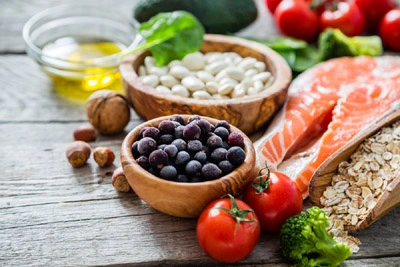
- Eat Nutrient Dense Foods. Nutrient-dense foods are full of vitamins and minerals that promote health. They have little added sodium, sugar, and saturated fats. Eat foods such as fruits, vegetables, eggs, seafood, beans, unsalted nuts and seeds, lean meat, and poultry.
- Limit Foods and Drinks with Added Sugar. My recommendation is to eat at least 85% of your calories from nutrient-dense foods while no more than 15% come from other sources. Take advantage of nutrition labels to help you choose food and drinks that contain less sodium, fat, and added sugar. Use them to your advantage.
The Bottom Line
MyPlate can be a helpful guideline that’s very basic for people of all ages. It’s really to know how much to eat from each food group, but at the same time it’s important to also follow my recommendations above for healthy eating. By eating unprocessed, nutrient-dense foods and limiting sugars and saturated fats, anyone at any age can begin forming healthy eating patterns.
I hope this helps with understanding the food plate guidelines and my recommendations to follow as well. If you have any questions, problems, or need my help don’t hesitate to reach out to me and I will be more than happy to help.
Until next time,
Darren
 Harmony Shift